Did you enjoy school? And what path did you take afterwards in terms of training or qualifications?
To be honest, I didn’t enjoy school. It wasn’t the learning I disliked, I loved gaining knowledge and understanding how things worked. The challenge was the environment. Primary school in Poland during the 1980s wasn’t exactly designed to inspire curiosity. Things improved when my family emigrated to West Germany, but a few years later I found myself at a very conservative high school in post-apartheid South Africa, where I was advised that, as a girl, I should focus on typing and home economics. That wasn’t a suggestion I took particularly well or followed.
That said, throughout those experiences I was fortunate to meet a few exceptional teachers who had a lasting impact. Looking back, education is ultimately what opened doors and shaped the opportunities I’ve had throughout my career.
So while I can’t honestly say I enjoyed school, I am a huge believer in education. Whatever path people take, my advice is always the same: education, education, education. It has the power to change lives.
Has your career path been a smooth transition, a rocky road or a combination of both?
A bit of everything. I certainly didn’t take a straight path into technology and data. Like many in the late 1990s, I started my career in marketing because that appeared the exciting place to be at the time.
It didn’t take long to realise that what really interested me was understanding why things happened, not just promoting them. I found myself drawn more and more towards analysis, data and technology, following my curiosity rather than any grand career plan.
Looking back, there were a few detours and plenty of unexpected opportunities, but those twists are what eventually led me to a career I genuinely enjoy and where I feel I add value.
Who has influenced you most as a leader, and where do you look for inspiration today?
When I was growing up, one of my heroes was Marie Skłodowska-Curie. There weren’t many female role models, and as someone who loved chemistry, I found her story interesting. She also left her home country, overcame significant barriers and went on to change the world through her work.
More broadly, I’ve always admired people who demonstrate perseverance and courage in the face of adversity. Having lived in South Africa during the end of apartheid, it was impossible not to be influenced by Nelson Mandela. The ability to hold onto your values through years of hardship and still lead with dignity and purpose is something I continue to admire.
Today, I find inspiration less in individual leaders and more in people who are curious, resilient and committed to making things better for others. Those qualities can be found at every level of an organisation.
What is the biggest challenge you have faced to date?
It’s difficult to pick one because every challenge teaches you something and, if you’re paying attention, helps prepare you for the next one.
An example could be when I joined the Civil Service just a few months before the COVID pandemic. I was still finding my way around a when suddenly HMRC found itself at the centre of a national emergency. Citizens and businesses were relying on us to deliver support at unprecedented speed, using systems and processes that weren’t designed for that purpose. What I remember most is collaboration. Everyone worked incredibly hard, across organisational boundaries, with a shared sense of purpose. It was a challenging time, but it was also an opportunity. For Data Science, it allowed us to demonstrate the value we could bring, expand the tools and approaches available to us, and deliver meaningful impact at pace and scale. For me personally, it was an accelerated introduction to HMRC and showed me what can be achieved when people unite around a common goal.
One thing I’ve learned is that major change always brings both opportunity and challenge. We’re seeing that again with AI. The potential is huge, but so is the responsibility to adopt it safely, ethically and effectively. The key is not to be afraid of the challenge, but to be ready for it.
What qualities do you feel makes a good leader?
I think a good leader starts with people. You have to listen, be approachable and create an environment where people feel comfortable bringing you ideas, challenges and occasionally bad news. If people are afraid to speak up, you are probably not hearing what you need to hear.
Trust is equally important. People don’t expect leaders to have all the answers, but they do expect honesty, authenticity and consistency. They need to understand where they’re heading and believe that you’ll do what you say you’ll do.
I also think good leaders need the courage to challenge. That means being prepared to have difficult conversations, make decisions when required and challenge assumptions, regardless of hierarchy.
Finally, I believe leadership requires a degree of determination and persistence. There is always more to do, whether it’s improving services for citizens, creating opportunities for colleagues or delivering better outcomes for the organisation. A good leader needs to keep people focused on that bigger purpose, even when the journey becomes difficult.



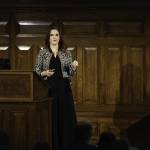
In short, I’d say the qualities I value most are listening, trust, authenticity, courage and a relentless focus on making things better
From a work viewpoint, what has the last 12 months been like?
The last 12 months have been a whirlwind, but in a good way. We’ve made real progress in how HMRC uses AI and data, turning ideas into practical tools that support colleagues and improve services for citizens.
I’m proud of what we’ve achieved, but I’m also conscious of how much opportunity still lies ahead. Whether it’s AI, data or wider digital transformation, there is so much more we can do to improve outcomes for citizens and help make the UK more productive and competitive.
That sense that there’s always another challenge to tackle, another improvement to make and another way to create public value is what keeps me excited about coming to work each day.
What would you say are the biggest tech-based challenges we face today?
People often assume the biggest technology challenge is the technology. I don’t think it is.
Technology will continue to evolve and the opportunities will change, but the constants are people and process. How do we build the right skills? How do we adapt ways of working? How do we manage increasing complexity without slowing ourselves down?
AI is probably the biggest shift many of us will see in our careers, but its success won’t be determined solely by the models and tools. It will be determined by whether organisations can help people adapt and create processes that are fit for a much more complex and fast-moving world.
That’s very much the challenge, and the opportunity, we are exploring at HMRC today.
What can be done to encourage more women into the industry?
This is probably my favourite topic because I’ve seen very different attitudes towards women in education and careers across the countries I’ve lived in. One fact that has always stuck with me is that women in East Germany were just as likely to graduate in STEM subjects as men, while in West Germany they weren’t. That tells us something important: talent is spread evenly, but opportunity and expectations often aren’t.
Technology needs a huge range of skills from both men and women. Yes, we need engineers and scientists, but we also need people who can understand users, bring different groups together, solve complex problems and think creatively
I’ve been fortunate to work with some extraordinary women throughout my career, and today I try to play my part through mentoring, encouraging girls into tech and by championing our award-winning Women in Tech network, which was recently named the best in the public sector.
If I had one piece of advice for women entering the profession, it would be this: don’t fill every spare minute helping everyone else or doing office housework. Leave some room for your own growth. Sometimes the most interesting opportunities appear when you least expect them, and you need the capacity to grab them.
What is one thing you know now that you wish you’d known at the start of your career?
Go for it. You’re worth it. I’ve spent far too much time in my career meeting brilliant people who underestimate themselves. You don’t need to tick every box, have all the answers or know exactly how something will work out. Be curious, take the opportunity and trust yourself a little more. Most of the opportunities that shaped my career came from saying yes to something that felt just beyond my comfort zone.
Give us a fact about you that most other people wouldn’t know
I’m quite an open book, so there probably isn’t a single interesting fact that I haven’t mentioned to other people.
However, I did live through the end of communism, German reunification and the end of apartheid before I was old enough to start my career. That gives you a unique perspective on change and teaches you not to assume that today’s reality will still be tomorrow’s.
It also left me with a deep appreciation for honesty, truth and strong ethical principles. Those values have stayed with me throughout my career and probably explain why I care so much about doing the right thing and paying back.