Did you enjoy school?
Yes, I loved it. But I didn’t work that hard, I was always being told off for talking too much.
What qualifications do you have?
I have a Geography BSc, Plant Genetics MSc and an MBA. Nothing at all relevant to Digital or IT, but that doesn’t matter. It’s being curious and passionate about what you do that matters.
Has your career path been a smooth transition, a rocky road or a combination of both?
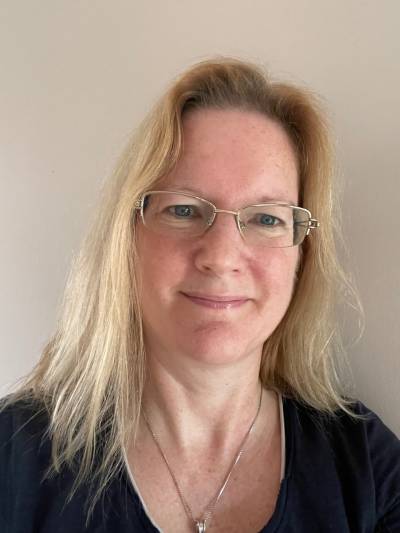
Very much a rocky road. I had no clear idea of what I wanted to do when I left university, so I took a variety of different roles. That changed when I was working at an academic publisher and began to get involved with the internet, which was still relatively new at the time. I was instantly hooked. I could see the opportunities that digital could offer, and it felt like I had found my calling.
I then worked on an internet start-up. It ultimately failed, but it taught me invaluable lessons, particularly about what happens when business decisions are driven by hype rather than data. Those lessons were critical in my next role at a charity and have stayed with me throughout my career. I have learned to be sceptical of hype, to scan the horizon for emerging opportunities, and to test ideas using data alongside my own experience of what genuinely works.
What is the best career advice you can give to others?
Find what you enjoy and do it well, this may take a few years, but don’t panic it will happen. Seek out people who think like you and build strong connections with them. Always be open to learning, and never assume you know everything or have seen it all. Give yourself space and time; step away when you need to, recharge, and come back with fresh perspective.
If you had to pick one mentor, that had the biggest influence on you, who would it be?
Sharon Cooper, my amazing boss around fifteen years ago at BMJ, had a profound influence on my career. She was the person who taught me about agile delivery and user-centric design, and, more importantly, showed me the kind of leader I wanted to become. She was visionary, kind, and supportive, while also being focused, determined, and exceptionally good at what she did.
From where do you draw inspiration?
Both talking and listening to people, anyone, any background I always learn something useful.



I have got great networks that I use to bounce ideas off or to gain energy from when I am exhausted and de motivated by the continued resistance and blocking by people to me trying to drive improvements and efficiencies, I understand why they block me but it still makes me tired when you feel you have to negotiate and cajole everyone when you are just trying to make stuff better.
What is the biggest challenge you have faced to date?
There are always challenges in the work I do. One of the biggest has been that, when it comes to delivering outcomes, I am still having the same conversations I was having ten years ago. These include explaining the value of multidisciplinary delivery teams, why incrementally building products in a user-centric way is the right approach, and why Product Managers and Product Owners are vital roles that are distinct from Project Managers, who are also highly skilled and essential in their own right.
What qualities do you feel makes a good leader?
The ability to inspire to sell a vision in a way that enables others to understand it and share it to give people freedom to do their best work with a clear understanding of the outcomes required to support them and encourage them and to ensure everyone is treated fairly encouraged to do well and corrected where they fall short.
From a work viewpoint what has the last 12 months been like?
An uphill journey as I had to adjust my mindset as I had been in a forward thinking Digital Agency that had huge expertise in modern digital delivery methods and always pushed for improvements and innovation with an emphasis on everyone learning in and working in a collaborative and multi-disciplinary way. But where I am now has a culture of excellence in each discipline which is amazing to be part of.
What would you say are the biggest tech-based challenges we face today?
In the public sector and probably in many private sector organisations as well the largest tech based challenge we face it’s removing that legacy systems that no longer support new technologies new ways of doing things and driving innovation. Trapping data and information in monolithic systems means we cannot use them and the new tools and ways of doing things it’s not just the systems itself but the legacy processes that are built around them or that they have been built on and the legacy culture that does not enable thinking in the right way to always seek to improve efficiencies and use the best technology available.
What can be done to encourage more women into the industry?
We must also examine the behaviour of men. Too many initiatives aimed at supporting women focus solely on changing or supporting women, yet the disparity remains. This makes it clear that the issue cannot be solved in isolation. Real progress requires working with both men and women, with shared accountability and a genuine willingness to understand different behaviours, power dynamics, and ways of working. Only then can we create environments where everyone can contribute fully and feel respected.
Give us a fact about you that most other people wouldn’t know.
I can get lost anywhere. I will confidently set off in the wrong direction, absolutely convinced I am going the right way. I get to see lots of interesting places that way.