Public sector organisations outside Whitehall must fix outdated systems, improve collaboration and give staff time to innovate if they are to realise the promise of AI.
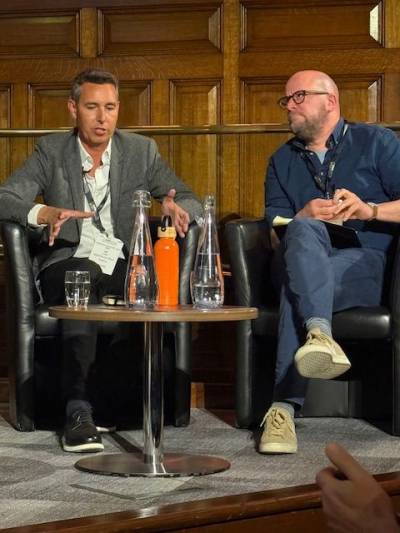
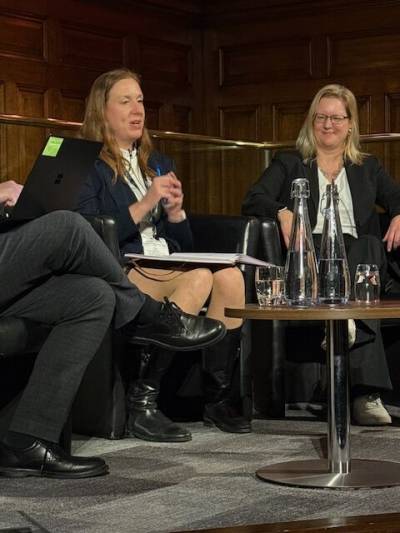
That’s according to leaders from local government and arms-length bodies (pictured) who say that AI has the potential to reshape services – but that many organisations are still constrained by ageing technology, fragmented decision-making and limited capacity.
Speaking at Think AI for Government, Kat Sexton, deputy director AI for local government at the Ministry of Housing, Communities & Local Government (MHCLG), said councils are under growing pressure after years of financial strain, with many lacking room for experimentation.
“We know it’s somewhere that’s separate from defining budgets the past few years, being asked to do more with less,” she said. “There’s less room for creativity.”
Sexton said the government’s local AI programme aims to support councils to adopt AI responsibly in ways that improve services, cut costs and boost efficiency. But she cautioned against layering AI onto broken systems.
“We don’t want to blast AI on everything. We need to think about what problems we’re solving, how we collaborate, and the ethical impacts of AI,” she said.
A leadership challenge for local government
CDO for London, Theo Blackwell, noted that local authorities had embraced new AI tools over the past two years, but often in isolation.
“They’ve been doing that alone,” he said. “How we begin to collectively share the learning that we are learning right now together, so we can reduce duplication… that is not just a technology challenge, that’s a leadership challenge too.”
Blackwell also said there has never been more investment in AI for local government, citing new support from central government and efforts to build common digital infrastructure.
He said that councils were increasingly exploring AI for practical frontline uses, from managing public assets and housing stock to understanding the built environment through computer vision tools.
But he warned that “legacy comes in two forms” – outdated suppliers and outdated thinking.
AI about people rather than tech
Elsewhere, Will Lowe, chief data & AI officer at Transform, said one of the biggest barriers across the public sector was duplication, with similar AI projects often being developed separately by different organisations.
If you liked this content…
 Lewisham uses AI to identify more than 3,000 potential housing sites
 Most organisations are not failing at AI. They are failing before AI.
 Three years in: what we’ve learned about making AI stick
 Council professionals not confident their authority will be viable on ‘Vesting Day’
 From ambition to action: what will it really take to make AI work across government?
“It’s heartbreaking. You see two very similar projects happening,” he said.
Lowe said scarce specialist resources should be directed towards projects with measurable value, rather than experimentation for its own sake. He urged organisations to start small and scale gradually “Pick something which is manageable value, get some funding, build that, prove it, and then roll on to the next,” he said.
He also argued that AI transformation is fundamentally about people rather than technology.
“It’s 70 percent people,” he said. “Just like data transformation was, just like digital transformation was.”
Esther O’Sullivan, head of digital at the Agriculture and Horticulture Development Board, agreed that organisations should stop treating AI purely as a technical issue.
“AI is not a technical thing. AI is organisational,” she said. “If you’re keeping it in your technology or data teams, you’re keeping it in the wrong place.”
O’Sullivan said leaders should focus first on core infrastructure and legacy technology, comparing digital modernisation to investment in roads or utilities.
“It may not feel particularly politically innovative, but actually, if you get that right, everything else will follow,” she said.
Sharing knowledge and standards
The panel repeatedly returned to the need for better sharing of knowledge and standards across the wider public sector. Speakers said discoveries, pilots and evaluations are often lost inside organisations rather than re-used elsewhere.
Blackwell said AI could help unlock that hidden institutional knowledge. “I genuinely think that AI has a tremendous opportunity… to liberate that kind of lost or hidden IP that exists within our organisations,” he said.
In closing, Sexton said the biggest opportunity was not simply automating current processes, but redesigning services entirely.
“AI is amazing,” she said. “It’s an opportunity to completely rethink how we deliver services… not just speeding up bits of what we already do.”
For his part, Blackwell’s urged public sector attendees to “relentlessly fix the plumbing, and secondly, try and create some extra time and space for people to collaborate.”