Expectations were high for Think AI for Government, and it didn’t fail to deliver. From the opening fireside chat with the new chief AI officer at HMRC, James Mitton, to the closing discussion on the future of AI in government, the mood was upbeat, ambitious yet pragmatic.
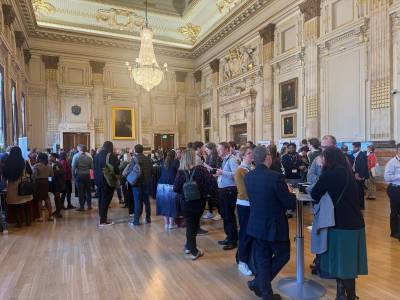
One of the key takeaways from the day was that public sector departments and agencies are already using AI in live settings, whether to improve productivity, support analysis or streamline internal processes.
Both government and industry experts maintained that successful adoption is not about rolling out tools for their own sake. It is about solving genuine problems. But the biggest barriers are often culture, confidence, procurement, governance and leadership rather than the technology itself.
Leadership means asking better questions
Discussions that centred on senior leadership and AI made clear that leaders don’t need to become engineers. They do, however, need to become informed decision-makers. That means asking what problem needs solving, where AI genuinely adds value, what risks need managing and how success will be measured.
“It’s not about making them tech experts, it’s about making them effective owners,” noted Claudia Lundie from the Home Office.
There was also a call for leaders to engage directly with AI rather than delegating it to technical teams. AI is becoming too important to sit in a silo.
Skills, literacy and judgement
One of the strongest discussions of the day focused on capability. Speakers repeatedly stressed that AI literacy must come before tooling.
They argued that not everyone in government needs to understand machine learning in depth, but everyone does need a baseline understanding of safe use, limitations, data quality and responsible practice, maintained the panellists.
That also means recognising the close link between data and AI. Poor data quality will produce poor outputs, no matter how advanced the model.
AI has to work with workers
Another theme was how AI affects work itself. AI can remove repetitive tasks and help teams move faster, but the real opportunity is improving work for public servants and outcomes for citizens.
Dr Anuj Mathew from the Home Office described AI as “not a choice we have… something which we definitely have to embrace,” adding that it is already “an operational capability.”
That creates important workforce questions. If entry-level tasks are increasingly automated, how do people learn the fundamentals of their profession? How do junior staff build experience and judgement?
Nicola McChlery from the Office of the Deputy Prime Minister suggested organisations may need to rethink assessment and development models entirely: “We don’t need you to write an essay. We want to see your prompt, and we want to see how you critique the output.”
If you liked this content…




Trust, transparency and shadow AI
Trust was another theme across the event. Whether discussing bias, explainability, agentic AI or cybersecurity, speakers agreed that public confidence will depend on transparency and clear governance.
One session focused on the “invisible workforce” of AI agents, where SailPoint’s David Tyrell warned that organisations now face “a new class of identity among us”, referring to AI systems that can access data, tools and workflows.
He warned that unmanaged experimentation can quickly become unmanaged risk. But the answer wasn’t to block innovation. Instead, organisations should provide safe, approved tools and monitor what is already happening.
“The best way to avoid shadow AI is by giving people the tools and the systems they need,” said Tyrell.
Beyond Whitehall: fix the plumbing
The wider public sector panel brought a useful reminder that AI adoption looks different outside central government.
Local authorities and arm’s-length bodies are often innovating while managing legacy systems, stretched budgets and limited capacity. Yet some of the most practical ideas of the day came from this discussion.
London’s chief data officer Theo Blackwell, argued that government needs to “relentlessly fix the plumbing” while also creating “extra time and space for people to collaborate.”
Sustainability matters too
Another sign of the debate maturing was the focus on sustainability.
Speakers argued that government must think not only about AI for sustainability, but also about the sustainability of AI itself. That includes the environmental costs of compute, water, hardware and supply chains, alongside AI’s potential to improve climate modelling, resilience and resource use.
From hype to hard work
By the final session, it was evident that the next phase of public sector AI will be defined by who can make it useful, measurable, trusted and sustainable in practice.
As Amelia Armstrong from GDS noted, organisations need to be “more mindful and bolder… to say when something’s not working so we can stop it before it becomes a legacy issue.”
Reflecting on the day, founder of Think Digital Partners, Matt Stanley, said: “From the opening fireside chat to the final session of the day on the Future of AI in Government, the insight was outstanding, the discussions were thought provoking, and the attitude was incredibly positive.”