Did you enjoy school?
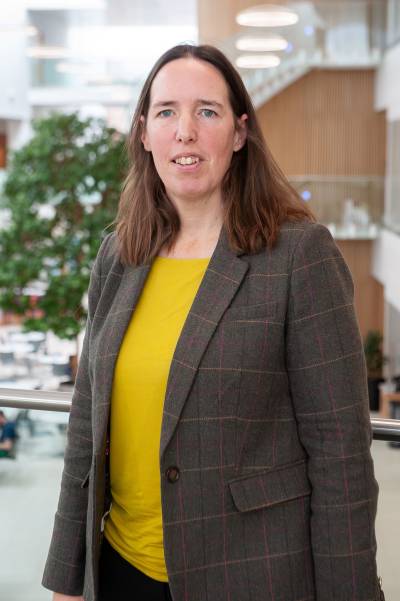
I love learning, even today, so enjoyed diving into different topics which stretched my thinking – with the exception of physics and chemistry which still leave me mystified.
What qualifications do you have?
I studied all the way through to PhD but didn’t complete it and headed into the world of work. I hold an MSc and a BSc in Environmental Biology and Geography.
Has your career path been a smooth transition, a rocky road or a combination of both?
It’s felt rocky at times, but overall it’s been a smooth transition after landing my first big role in geospatial. The geospatial industry is an interesting sector to work in, and I’ve had great opportunities to move from hands-on technical roles to advisory/consultancy roles, and even into leadership – across a wide range of organisations, from small start-ups to large geospatial companies and government.
What specific challenges do you see women facing in the industry?
Women in tech often face challenges such as underrepresentation in senior technical roles, limited access to mentorship, and balancing career progression with personal responsibilities. While these challenges persist across the industry, I’m proud of how Ordnance Survey is tackling them. Our vibrant Women+ Development Network offers career and personal mentoring, helping women stretch themselves further and aim higher. Key to this progress is championing individual success and building networks with women across the wider geospatial industry-fostering a supportive and inclusive community.
What is the best career advice you can give to others?
Back yourself and take opportunities that don’t necessarily look like they align with what you excel at. I never planned to reach leadership, being naturally shy and introverted. But by stepping up on projects, I continuously learned new skills that helped me grow and develop.
If you had to pick one mentor that had the biggest influence on you, who would it be?
This is a tough one as I’ve had a few. The one that had the biggest influence is Ian Painter. I was his first business consultant, working with him in pre- and post-sales to support new clients. After a spectacular failure to prepare for an important workshop – fuelled by imposter syndrome – he didn’t bail me out. Instead, he gave me the confidence to run the workshop with just me and a whiteboard, because he trusted I could do it when I didn’t believe I could.
From where do you draw inspiration?
Being a huge introvert, I draw a lot of inspiration internally and have a natural curiosity.
If you liked this content…



Right now, my inspiration comes from the potential of data analytics and AI to enhance products, services, and productivity across both the public and private sectors. It’s an exciting time to work in data.
What is the biggest challenge you have faced to date?
The biggest challenge I face is the continuous battle with imposter syndrome. It’s an insidious beast that sometimes appears from nowhere. When it does, I check in with myself, friends, and colleagues to quiet the noise and remind myself to back my abilities.
What qualities do you feel makes a good leader?
The key qualities of an authentic leader include caring about both people and purpose, and demonstrating passion over power.
From a work viewpoint, what has the last 12 months been like?
I’m not 12 months into my role as head of geospatial data, and it’s been a whirlwind of change: bringing five teams together into a new function and aligning them to work within a new service-oriented, cross-functional operating model to deliver our five-year Data and Destinations Strategy.
What would you say are the biggest tech-based challenges we face today?
Effective data sharing is critical. The boom in AI is driving unprecedented demand for high-quality data, yet the challenge of interoperable sharing remains unsolved. We need to help organisations and communities build robust, secure data infrastructures—tools, technologies, and capabilities that make data easy to find, access, and use – unlocking its full value and insight.
What can be done to encourage more women into the industry?
Today, we have a better balance of women in data and tech roles particularly at OS, but more needs to be done to encourage women to take up senior and leadership positions.
Give us a fact about you that most other people wouldn’t know.
I can play the cello (well I could – it’s been a few years!)