
Did you enjoy school?
If I’m being honest, no, I did not. I vacillated between bored, and at times, frustrated – I wanted to spend more time on certain topics and less on others. As an adult, I’ve come to recognise that I am an experiential learner… I love to learn by doing things and by being immersed in the topic which interests me. This learning style has served me well in my career in cybersecurity – an area that’s constantly changing and evolving.
What qualifications do you have?
Other than my college degree in English, my qualifications have all come from on-the-job training. I’ve spent 45 years in technology, 25+ of which have been in cybersecurity.
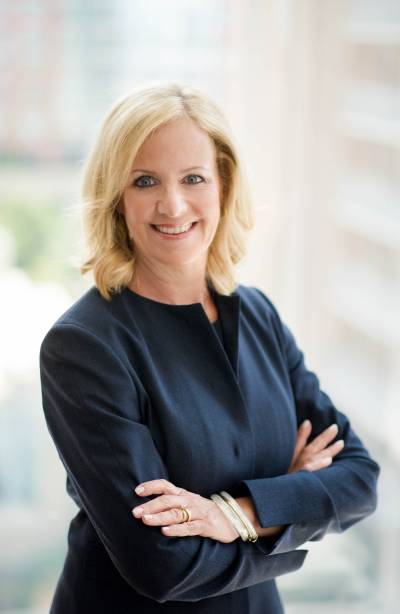
Has your career path been a smooth transition, a rocky road or a combination of both?
My career has been a bit of both; my very first job was writing technical documentation, but I quickly transitioned to being a software developer. Luckily, I was working for a small company, and therefore, got the opportunity to do a lot of things in addition to writing code – working with customer to develop requirements, coding, implementing, and training. I discovered that I really enjoyed the people aspects of my job… helping customers to articulate their needs (and often helping them to uncover or understand them) and then working to provide a solution for them was extremely satisfying to me. That let me to the bulk of my career which has been in the go-to-market (sales) and/or services space.
What specific challenges do you see women facing in the industry?
Well, the challenges have changed, and in fact lessened over time, but they still exist. I’ve often found myself being the “first” or the “only” in my career – the first salesperson at my company to have a baby (and then return to work), the first female sales leader or VP. Being the first or only adds an extra layer of having to prove yourself. Of course, I always had to be very aware of my communication style to not play into an existing stereotype – passion for a topic could lead to being called emotional; advocating for myself or my team could be considered pushy or angry.
What is the best career advice you can give to others?
To those just starting their career, I always say give yourself the gift of time. You don’t have to have your career path mapped out on day one or even day 365. Try new roles; take advantage of opportunities that you see, and you’ll learn – what you like to do and what you don’t; what you’re really good at, and what you are not good at.
If you had to pick one mentor that had the biggest influence on you, who would it be?
The mentor that had the biggest influence on me was John Thompson (then the CEO of Symc). He believed in my potential and gave me opportunities based on that potential. He also always had the greatest advice and the greatest stories. I learned the most by just watching and listening to him and often trying to copy him!
From where do you draw inspiration?



I draw inspiration from my customers. I’ve worked closely with government and industry leaders, and when you really get to know them, the vast majority of them are trying to do very difficult jobs, often with substantial obstacles. If I can help them to get their job done, or done better, or if I can help them to remove an obstacle, then I feel great about myself and our company.
What is the biggest challenge you have faced to date?
I love to build and grow a business. So, for me, the biggest challenge is when I have had to reduce the team because we were in a downturn or not growing as fast as we had planned. I am only as good as the people who work for me and with me, and to have to layoff talented and motivated people is incredibly difficult.
What qualities do you feel makes a good leader?
I think that I am good at reading people – understanding their strengths and weaknesses and meeting them where they are to help develop them and help them to be ready for newer, bigger opportunities. For me, being a good leader always starts with the people. From there, I think that being a clear communicator, being consistent, so that people know what to expect from you, and having high standards for myself and others are really important. If I take good care of the team, they’ll take good care of our customers, and the business will grow and thrive, therefore taking good care of our shareholders.
From a work viewpoint, what has the last 12 months been like?
The last 12 months has been a time of transition and learning – two of my favourite things. The small company I was with for eight years was acquired. I was extremely involved in the sale of the company, and equally as involved in the integration into the new company. Many people hate change, but I embrace it… after eight years in the same role, I was more than ready for something new!
What would you say are the biggest tech-based challenges we face today?
I would say that the biggest tech-based challenge is maximising the promise of AI, without giving in to the hype. There are so many real problems that AI will help us solve or solve easier/faster. We’re all going to have to learn and adapt at a record pace.
What can be done to encourage more women into the industry?
Start young. I have four young granddaughters, aged 2-1/2 to 10. Let them know that girls really can do anything… encourage them to be competitive, vocal, and proud of themselves. Challenge them to question any stereotype and praise them for being bold – even if it doesn’t work out the way they wanted it to.
Give us a fact about you that most other people wouldn’t know.
I am a classically trained chef who went to culinary school (the only school I really DID enjoy). I only cook for my family and friends and as a hobby, but I still love to do it!


