Public sector organisations may have bought thousands of AI licences, but getting employees to use them is emerging as the next challenge for government.
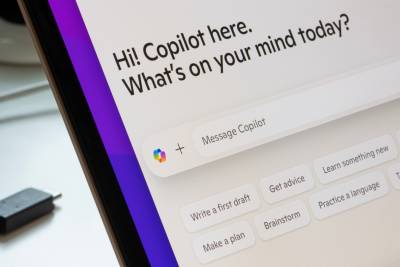
Tech supplier Trustmarque Ultima (TMU) said it is seeing significant gaps between the number of AI licences purchased by public sector organisations and the number being actively used. In one example, an organisation had around 23,000 licences but fewer than 1,000 were being used.
“The advantage of the public sector, in particular, is that a lot of the AI capabilities are bundled into their licensing agreements,” said TMU CEO Simon Williams.
That can make acquiring the technology relatively straightforward – getting tens of thousands of employees to change the way they work is another matter.
“They bought the licences, but they’re not using them,” Williams told Think Digital Partners at the Canalys Forum in Barcelona.
While government departments and other public bodies pursue increasingly large-scale generative AI deployments, measuring the number of licences rolled out gives only a partial picture of adoption.
The company uses its Prism technology to analyse customers’ software and cloud estates, including how many licences they hold and whether they’re actually being used. That same approach can now be applied to Copilot licences and AI agents.
Williams gave a hypothetical example of an organisation holding 10,000 Copilot licences but having only 1,000 actively used.
“You’re spending money on 9,000, and you’re only using 1,000,” he said.
The same issue is beginning to emerge with AI agents, he added, where organisations need to understand not simply how many have been created, but whether they’re being used and delivering the benefits set out in their business cases.
Why aren’t people using AI?
There is no single explanation for low adoption. Asked why employees might have access to AI tools without using them, Williams said it could encompass “every reason you can think of”.
That includes concerns that using AI could ultimately threaten someone’s job, alongside uncertainty over how to use the technology, where to start and which tasks it is suitable for.
TMU’s CRO Tanaz Gould said employees can also be unsure about the rules surrounding AI: “Am I allowed to use it in this way? What’s going to happen if I use it in that way? We’ve never done it like that before.”
If you liked this content…
 Beyond the pilots: Rethinking public services for the AI era
 Government must look beyond generative AI to deliver better public services, says Atos
 Beyond AI adoption: How government can turn technology into productivity gains
 Beyond the AI pilot: What government needs to get right to deliver at scale
 Why successful AI transformation starts with people
Public sector working practices can add another barrier.
“I think in a lot of public sector organisations, experimentation of ways of working isn’t particularly encouraged,” said Gould.
Williams added another explanation: people are just “too busy”.
The result is that providing access to technology, or even running initial training sessions, may not be enough to create lasting changes in behaviour.
From adoption to ‘absorption’
Gould argues organisations should distinguish between AI “adoption” and what Trustmarque Ultima calls “absorption”.
“Adoption is you try and use it; absorption is actually when you integrate it in your day-to-day work, and I think that’s when we start seeing true value,” she said.
That requires organisations to understand how different groups of employees are responding to AI rather than treating the workforce as a single group.
TMU’s approach includes examining usage data and use cases, identifying “super users” who find productive ways of using the technology, and identifying employees who need more support.
Williams said organisations need education, engagement and change management alongside the technology itself.
There’s also a financial incentive to understand whether AI is being used. As organisations deploy agents alongside human employees, they will increasingly have to account for their computing, software and management costs when setting budgets.
Public sector procurement shifts towards adoption
There are signs that public sector buyers are recognising the problem. Williams said it is now seeing sizeable public sector procurements specifically focused on AI adoption, rather than simply acquiring the underlying technology.
“We’re seeing big RFPs coming out in public sector just for adoption,” he said. “Last year was people buying licences. This year is more ‘get us using’ RFPs around adoption.”
For government organisations, the question is increasingly moving from how many employees have been given access to AI to whether the technology is being incorporated into everyday work and producing measurable benefits.