If you’re waiting until you feel ready for a role in digital, you may already be falling behind.
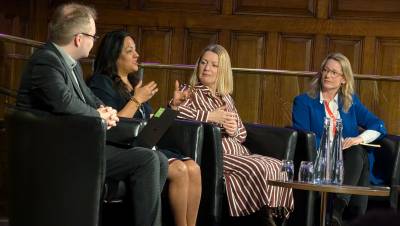
That was one message from senior women leaders across UK government and industry at the Think Digital Women in Government event in London this week (pictured). There, they challenged some of the most persistent myths about careers in tech – from needing the “right” background to having complete confidence before stepping up.
Here is some of the advice they offered up to anyone building a career in digital leadership.
1. Don’t wait to feel ready – step forward anyway
One of the strongest messages from the session was simple: act before you feel qualified.
Director of digital identity at the Government Digital Service (GDS), Natalie Jones OBE, shared her own experience of entering tech: “I had no IT background at all… but I put my hand up.” That decision launched a career now leading major national programmes, including the government’s digital identity platform, GOV.UK One Login.
Purnima Sen, COO at Sparta Global, recounted a similar mindset that took her from running an ice delivery business to leading in the tech sector. Her advice to the audience was “Say yes in the moments that matter… say yes to an opportunity you can’t quite clearly see.”
2. Stop trying to be the smartest person in the room
Several speakers reflected on time lost trying to prove expertise rather than build understanding.
“I spent a lot of my career trying to be the smartest person in the room… I don’t think that’s really important,” said Sen, who instead, she urged the event’s attendees to focus on curiosity. “Be comfortable asking more questions.”
Jones agreed, describing what good technical leadership looks like: “The very best techies are people who can make very complicated things seem quite straightforward.”
3. Use what you already have – your “superpower” matters
For those feeling like outsiders in digital, the panel pushed back on the idea that only technical specialists belong.
Anais Reding, CDO at the Department for Business and Trade, revealed she entered tech from a psychology background. She explained: “No one has all the answers… you need to know what you’re bringing – what your superpower is.”
She pointed to collaboration and people skills as critical: “The ability to bring people together… is, I think, quite often a woman superpower.”
4. Work smart or risk being busy without impact
With the pace of digital work accelerating, effort alone is no longer enough.
Reding warned: “Working hard… doesn’t necessarily mean having an impact.” She stressed that prioritisation is now critical: “Working smart is ever more important today.”
Jones offered a practical way to think about this: “Do the things that only I can do.” Everything else, she argued, should be delegated or shared to grow others and maintain focus.
5. Accept trade-offs – there is no perfect balance
The panel rejected the idea that careers can be optimised in every direction at once.
“It’s a myth that you can have it all… you have to make choices,” said Jones. Reflecting on her own experience raising children alongside a senior career, she described life as “chaos… but they feel like they’ve got the balance right.”
If you liked this content…




Reding added that success should not be defined purely by progression: “[It’s] not always looking at climbing the ladder, but really thinking about where I can be happiest.”
6. If the system is stacked, decide your response quickly
On cultures where roles appear pre-allocated or advancement feels blocked, the panel urged realism and action. Reding challenged the audience to assess their environment: “Is that an environment that you’re interested in? And if it is, can you have impact on that environment?”
If not, she said: “Life’s too short to keep butting against a hard wall.”
But even in those situations, self-advocacy matters. “Standing up for ourselves… even if you’re going to be leaving, is really important.
“The process can help people see you differently.”
7. Back yourself, even when you don’t meet the criteria
Confidence gaps remain a recurring barrier, particularly for women.
Sen highlighted a familiar pattern: “Women look at a role and say, ‘I can only do 70 percent of it’… we need to change that mindset.”
Her own approach was proactive: “I wrote a business case of why I was right for the role… be prepared and show yourself.”
8. Learn constantly, and don’t rely on formal pathways
None of the speakers followed a structured route into digital, and they encouraged others not to expect one. Sen stressed adaptability: “Learning to learn… if you can pick up the problem, adapt, learn, move on, you will always be successful.”
Jones described a more informal approach: “I found a friendly engineer and just badgered them for information.” Her advice: “Don’t be shy – ask.”
In the panel’s view, curiosity often outpaces formal training.
9. Build networks that challenge and support you
Mentorship came up repeatedly, but not always in traditional forms. Sen described deliberately changing mentors over time: “I’ve had a different mentor every four years… you just need another perspective.”
Reding highlighted that effective support can come from unexpected places: “My two best coaches… were actually my male line managers.”
The takeaway is to seek out people who stretch your thinking, not just those who mirror your experience.
10. Stay open – you don’t know where your career will lead
Finally, the panel urged leaders not to narrow their options too early.
“Almost anything can be interesting when you find out enough about it,” said Jones. From prison WiFi to digital identity, she argued, impact often comes from curiosity more than anything else.
Taken together, the advice from the panel is that digital careers will not wait for perfect plans, complete confidence or clear pathways.