At November’s Think Digital Government event, one topic resonated strongly with attendees: the role of suppliers in developing in-house skills. There was keen interest – and some concerns – around how organisations can invest in people without losing them, how to use capability clauses effectively, and how to create an environment where learning is genuinely supported.
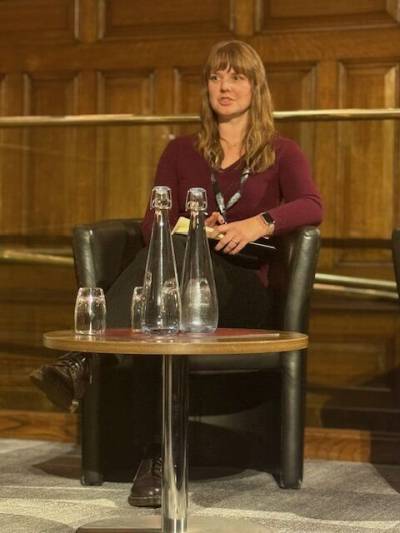
We caught up with Rheanna O’Donoghue, delivery partner at Hippo, who shared her thoughts on partnering with government, building confidence in delivery teams, and why it’s essential to create “a culture where it’s okay to be wrong”.

Q: When we talk about suppliers helping to build digital capability, what does ‘good’ look like?
It starts with honest, open conversations. Suppliers bring expertise – but we can only apply that effectively if we understand the client’s real context and the skills they feel they need support with. Government teams can sometimes say, “We’re fine, just deliver this one thing,” when they’re dealing with big challenges, tight constraints and pressure around emerging tech like AI.
Capability-building doesn’t always mean big training programmes; the most valuable learning often comes through day-to-day collaboration. It’s about creating safe spaces – letting someone new run a stand-up with support beside them, modelling good practice and giving people permission to try, fail, and learn. That’s where real, lasting capability grows.
Q: Capability expectations sometimes get written into contracts but aren’t used effectively. How can delivery teams make more of them?
First, read the contract! These clauses shouldn’t be secret. Procurement and delivery teams can get disconnected, so leaders need to work with procurement early. They should write capability requirements into the bid, and weight them appropriately – cultural fit and knowledge transfer are usually scored too low.
And once a supplier arrives, the conversation should be: What capability do you want to build? What does success look like? How do we reduce reliance on us over time? A good supplier should be willing to talk about “how we make ourselves redundant,” even if that feels uncomfortable.
Q: For teams that don’t feel confident challenging suppliers, how can they start those conversations constructively?
Start early, and keep talking. If you know a role is temporary until a civil servant is recruited, say that up front – it sets a clear expectation of handover and knowledge transfer.
If capability gaps feel sensitive, frame it positively: What do we want to build? What support would help our people grow? Asking about coaching methods or learning approaches can be a softer way in. It’s never about what people lack – it’s about what you’re helping them gain.
Q: How can departments make learning systematic, not dependent on “personal luck” of who they work with?
Communities of practice are hugely valuable, and massively underrated. They give people a safe space to test ideas, ask “silly” questions and learn from others. Too often they’re the first thing dropped because they don’t look “productive”.
If you liked this content…
 On Building Digital Capability, Leaders Call for Culture Shift, Not Just Recruitment
 Government must look beyond traditional recruitment to close digital skills gap
 Think Digital Government: Key Takeaways
 Government’s AI transformation demands radical procurement overhaul
 How public sector leaders can upskill their workforce with emerging technology
But real capability isn’t just “Can you write a ticket?” It’s resilience, confidence, experimentation. Everyone says, “fail fast”, but failing is only constructive if the environment truly supports it. The biggest learning comes when things go wrong. Making that feel okay requires a conscious cultural shift.
Q: A common worry is: “If we invest in people, they’ll leave.” How should public sector organisations reframe that concern?
We tend to focus on the negative – what if they go? But what’s the actual impact? If someone moves to another government department, that’s still a gain for the public sector. And withholding development so people feel trapped is far worse – that’s when they leave permanently.
If you invest in people – give them career paths, support, excitement – they stay. Retention is built on meaning, not restriction. We need to think less in organisational silos and more in outcomes for citizens. Movement of skilled people across the system strengthens that.
Q: There’s growing interest in secondments and cross-sector placements. Could suppliers collaborate with government on these?
Absolutely. We should treat digital roles as a profession with opportunities to gain industry-wide experience. Imagine the value of civil servants spending time inside a major tech company, and bringing that knowledge back.
The practicalities will differ – not everyone can move at once – but someone needs to be bold enough to pilot it. Three six-month secondments could deliver huge insight. The key questions are: What will individuals learn? How will they apply it back home? What does success look like?
Q: Finally, what’s the key message you’d like readers to take away?
This doesn’t have to be an “us vs them” dynamic. When it works well, supplier-government relationships are true partnerships focused on delivering the best outcomes for users.
Suppliers aren’t the enemy – many of us are former civil servants. We want the same thing: successful delivery and a capable, confident public sector workforce. Government will always need flexibility from suppliers, and that’s okay. The key is bringing the right expertise in at the right time, while continually growing capability within teams.
Ultimately, capability-building is about creating the environment for people to learn – to try, to question, to get things wrong, and to improve. If we get that right, everyone benefits.