The Civil Service must rethink how it operates if it is to realise the benefits of AI, according to Cabinet Secretary Dame Antonia Romeo.

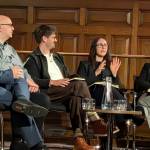
In a speech at the London School of Economics, Romeo (pictured) outlined plans to transform the Civil Service through AI, organisational reform and new ways of working, including the creation of small, agile teams given greater freedom to recruit specialist talent and redesign outdated processes.
However, management consultancy Q5 said technology alone wouldn’t address the structural problems holding back public sector productivity.
“You cannot automate your way out of an organisation design problem,” said Olly Purnell, co-founder and managing partner of Q5, which has supported government departments including HMRC, the Home Office, DSIT and DESNZ.
“The Civil Service absolutely needs to become more productive, but productivity cannot simply mean asking people to do more with less.
“New technology and AI can remove low-value work and create huge amounts of capacity, but they won’t fix structures that are too complex or decision-making that is too slow.”
Rethinking how government works
Romeo described the Civil Service as facing a convergence of challenges, including rapid advances in AI, declining public trust, growing demand for services and the need to improve productivity.
She noted that UK public service productivity remains almost three percent below its pre-pandemic peak, despite additional investment and some recent improvements.
Romeo pointed to existing examples of AI adoption, including HMRC’s use of machine learning to protect and recover £10 billion in tax revenue in the last tax year, and AI being deployed to help halve processing times for routine householder planning applications.
However, she acknowledged that technology would not deliver its full potential without wider changes to government operations.
“But history shows us that pure automation of specific tasks absent a rethinking of the entire workflow, or indeed the whole operating model, will not fully capture the underlying gains from technology, and their productivity benefits,” she said.
The government must also simplify business processes, remove unnecessary bureaucracy and address organisational structures that discourage innovation, she argued.
New teams to accelerate transformation
Among the proposals outlined in the speech was the introduction of ‘Frontier Teams’ within government departments.
If you liked this content…
 Public trust in government AI must start with accountability, experts warn
 DWP getting results with AI – but new report calls for stronger innovation culture
 AI could help government tackle legacy IT faster, pilots find
 DWP training staff in AI
 Government launches Cloud Challenge Book to reshape public sector cloud strategy
These small, agile teams would be given an explicit licence to operate differently, including recruiting specialist talent more quickly and redesigning outdated processes. Romeo said the approach would demonstrate what a faster, more flexible Civil Service could look like in practice.
She cited the establishment of the AI Security Institute in six months in 2023 as an example of how government can move quickly when traditional constraints are removed.
The proposed teams form part of the wider Future Civil Service programme, which is focused on delivery, innovation and productivity, and pride and trust.
The programme will also seek to simplify recruitment, expand AI-focused training and change how expertise and performance are rewarded.
Romeo announced that the expanded Civil Service Fast Stream would place greater emphasis on AI, while the recently launched National School of Government and Public Services would provide access to digital, analytical and operational skills training.
Legacy technology remains a barrier
The scale of the challenge is illustrated by recent evidence from the Department for Work and Pensions (DWP), where senior officials have acknowledged that ageing tech continues to constrain service delivery and policy implementation.
Speaking to MPs on the Work and Pensions Committee, DWP permanent secretary Dame Sarah Healey said employees were frequently working with extremely old computer systems and inflexible processes that prevented them from providing the support they wanted to deliver.
The department is undertaking an 11-year, £312 million Service Modernisation Programme, running from 2022–23 to 2032–33, to modernise services and upgrade legacy IT systems.
The limitations are already affecting policy delivery. Changes to Carer’s Allowance announced in the 2026 Budget are not scheduled for implementation until 2030–31, with the existing IT system unable to accommodate the proposed earnings taper.
Healey acknowledged the frustration but cautioned that attempting to change ageing systems too quickly had historically proved unsuccessful.
A more fundamental review
Romeo’s proposals also form part of a wider examination of the future structure of government.
The Review into the Organisation, Performance and Transformation of the Permanent Civil Service, launched in July, will report to the Prime Minister before next summer.
It will consider whether existing departmental structures remain appropriate, how AI and greater devolution should affect accountability, and what capabilities government needs at national, regional and local levels.