Andy Burnham’s warning that the NHS could collapse without social care reform reflects pressure that has been building for years.
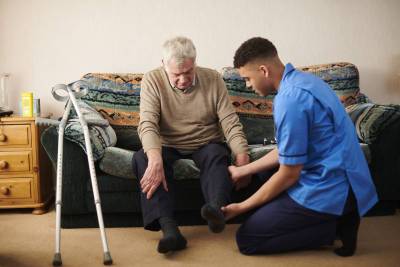
Hospital beds remain occupied by people who are medically ready to leave, ambulances continue to face delays, and people who could remain independent with the right community support can find themselves returning to acute care as the only option.
Much of the debate will focus on funding. But money alone will not resolve the operational gap between somebody being declared medically ready to leave hospital and a community service confirming when care can begin.
If local teams cannot see and mobilise capacity quickly, people will continue waiting – regardless of how the system is funded or structured.
The gap between hospital and home
A person leaving hospital will usually need an assessment. The hospital may recommend an initial care package, which is then referred to a social care or reablement service for its own assessment.
Those assessments do not always align. Some triage is needed to understand the person’s actual needs and what can realistically be delivered.
The next question should be straightforward: when can care begin?
In practice, answering it may involve significant manual work. Teams can find themselves checking spreadsheets, contacting coordinators and comparing rotas before establishing whether capacity is available. I have even encountered services using Post-it notes to track gaps in carers’ diaries.
This is not a criticism of those teams. They are doing everything they can with the systems and resources available. But if identifying capacity takes several days, somebody may remain in hospital longer than necessary.
The Care Quality Commission has identified social care capacity, transfer delays and limited access to rehabilitation and reablement as major contributors to ongoing delayed discharges.
Behind every delay is a person who would usually prefer to recover in familiar surroundings.
Reablement should be central to NHS reform
A successful reablement service does more than facilitate hospital discharge. It helps people rebuild confidence, regain everyday skills and continue living independently.
Government figures show that more than six in ten older people who received reablement after leaving hospital in 2024/25 remained in the community 12 weeks later. Yet only a small proportion of those discharged received the service.
Its value should not be measured only in beds released or costs avoided. Success is seen when somebody can make their own breakfast again, move safely around their home or reduce the support they need.
Relieving pressure on hospitals is an important consequence. Helping people remain independent is the purpose.
Frontline workers are carrying too much administration
Social care is demanding, often not well paid, and sustained by people who care deeply about those they support. But their commitment is being tested by processes that make an already difficult job harder.
Where there is no effective communication channel between care workers and coordinators, everything becomes a phone call. A worker cannot access a property. A visit runs over. Somebody is absent. A person’s needs change. The coordinator must respond while managing the day.
If you liked this content…
 MHRA and Manchester NHS launch sandbox to test AI and health tech
 In the spotlight: Lancashire County Council uses AI to give social workers more time with people
 Palantir row reignites debate over public sector dependence on big tech suppliers
 Fix processes before AI, says Celonis
 NHS SBS and Salesforce launch AI platform to streamline NHS finance and procurement
In one coordination centre I visited, a team member had missed around 70 calls in half an hour.
The same applies to scheduling. Many services must accommodate large numbers of visits at the same time each morning because people need help getting out of bed, preparing breakfast or taking medication.
But when every visit has a fixed start time, a service may need a large number of workers for a short morning peak, followed by gaps later in the day.
Care must always be organised around the person. Carefully agreed arrival windows can give services greater flexibility while continuing to reflect the person’s needs and dignity.
This is not about reducing the workforce or asking carers to rush through more visits. It is about cutting unnecessary travel, phone calls, administration and last-minute changes. It is about making existing capacity easier to see and deploy.
Technology must be an enabler, not an inhibitor
Technology has an important role to play, but only when it begins with a simple question: does this make life easier for the frontline worker?
It should help services see capacity, allocate work fairly, maintain continuity of care and respond when circumstances change. It should give workers clear information without adding more administration.
It must also be intuitive and reliable. A frontline worker cannot be left stranded because a system is difficult to use or fails when they need it.
Most importantly, technology cannot replace the face-to-face relationship between a carer and the person receiving support. It cannot replace the reassurance of a familiar face, the ability to notice that something is not right or the trust built through consistent care.
What it can do is create the conditions for more of that meaningful interaction to happen.
Reform needs an operating model
Funding will be fundamental. So will addressing the conditions facing a workforce under considerable pressure. Local authorities cannot be expected to transform services while resources remain under strain.
But a funding model is not, by itself, an operating model.
A successful National Care Service must also make it easier for local teams to understand demand, identify capacity, coordinate care and respond when somebody’s circumstances change.
Reform will ultimately be judged by what happens when somebody is ready to return home.
Can care begin without delay? Will they see people who understand their goals? Does their carer have enough time to focus on them? And has the person been given the best opportunity to live independently?
The NHS crisis may be most visible inside our hospitals. But it will not be solved there.