A plan to improve the digital tools used by benefits caseworkers has been named the winner of this year’s Civil Service AI & Data Challenge, after judges selected the proposal from a record 252 submissions from officials across government.
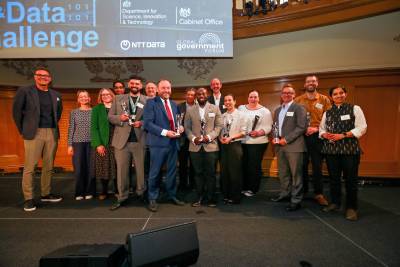
The winning idea, developed by Marlon Woodley from the Department for Work and Pensions (DWP), aims to create a casework assistant service designed to help staff make decisions more quickly while reducing errors and delays for claimants.
Woodley said the proposed tool would “enable caseworkers to make better decisions more quickly, reducing waiting times and ensuring that people receive the benefits they’re entitled to.”
The initiative will now receive £50,000 in technical support from NTT DATA to help develop the concept further.
Record interest in AI across government
Now in its fourth year, the Civil Service AI & Data Challenge is run by NTT DATA in partnership with the Department for Science, Innovation and Technology, the Cabinet Office and Global Government Forum.
This year’s programme expanded its remit from data to include AI, contributing to what organisers described as a 160 percent increase in applications.
Of the 252 ideas submitted by civil servants, around 70 progressed to workshops led by senior data leaders across government. Those were narrowed down to 57 formal submissions before eight ideas were selected for further development by cross-departmental teams working alongside NTT DATA specialists. Four finalists eventually reached the Grand Finale in Westminster on May 20.
The judging panel was chaired by David Filmer, managing director for UK&I public sector at NTT DATA, and included senior government digital and data leaders including government chief data officer Aimee Smith and chief AI officer Kalbir Sohi.
The winner was announced by Ian Murray, minister for data and digital government.
Government pushes AI into public services
Speaking after the final, Murray said the winning proposal showed how AI could support frontline public services.
If you liked this content…



“Marlon’s standout idea has real potential to transform how government serves people,” he said. “By giving caseworkers better tools, it could help them make faster, more accurate decisions and focus their time where it matters most – improving our public services.”
“A record number of entries this year shows civil servants aren’t just ready for the AI revolution – they’re driving it.”
The challenge comes as government continues to push departments to identify practical uses for AI to improve productivity and reduce administrative burdens across public services.
Aimee Smith, the government’s chief data officer, said the scale of interest demonstrated growing enthusiasm among civil servants to deploy AI and data technologies in operational settings.
“Civil servants are really excited about the ever-growing capabilities of AI and data technologies, and they can see huge opportunities to apply them in government – saving staff time and improving public services,” she said.
Smith also highlighted the speed at which teams were able to build prototype solutions during the competition using AI-powered software engineering tools.
Cross-government collaboration
The winning team was supported by the DWP and included officials from DWP, HM Revenue and Customs, the Ministry of Justice and the Crown Commercial Service. Other projects received backing from departments including the Department for Energy Security and Net Zero and the Foreign, Commonwealth and Development Office.
David Filmer said the challenge had demonstrated strong engagement from officials across government.
“Their commitment and enthusiasm – both for the Challenge itself, and for the wider data and AI agendas – have been amazing to see,” he said. “We look forward to supporting the winning team as they carry their idea forwards.”