Background
When Somerset Council was formed as part of the most significant reorganisation of local government in half a century, five district councils became one unitary authority serving 570,000 residents. Unifying services, systems and teams was essential to delivering a seamless experience for communities – and payments quickly became a priority.
The Challenge
“When Somerset Council emerged as a new unitary authority we transitioned from five separate district councils into a single organisation,” explained Steve Rose, IMS project strategic finance lead at Somerset Council. “That shift brought with it the complex task of bringing together systems, services and teams so residents could experience a more streamlined, consistent council.”
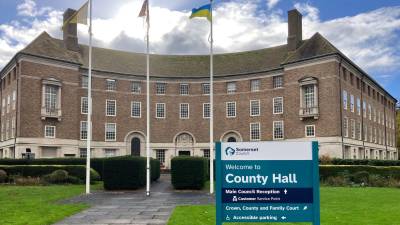
Payments were among the most urgent areas requiring consolidation.
“As the merger went underway, it soon became apparent that one of the most immediate priorities was payments. Each predecessor council operated its own infrastructure, contracts and processes that needed to be reviewed and collated,” said Rose.
“As it was, this patchwork of systems created unnecessary work for staff, complicated the experience for residents and made real-time income monitoring far more difficult than it needed to be.”
Five legacy systems – each with their own architecture and operational habits – had to be brought together into one unified approach.
“To provide dependable, accessible and transparent financial services, everything had to be consolidated, and with five legacy payment systems all coming with their own architecture, coding conventions and operational habits, merging them all together was, unsurprisingly, a big undertaking,” said Rose.
Yet the transformation presented an opportunity.
“Within that complexity was an opportunity: a chance to build something forward-looking rather than stitching together remnants of the past. Our ambition wasn’t simply to swap out old systems; it was to create a modern, unified payments ecosystem that would support a more connected council and a better experience for our communities.”
The Solution
The timeline was demanding.
“The timescales were tight,” said Rose. “With historic contracts ending in December 2024, we had just four months to launch a single income management system. Delivering on time didn’t just protect service continuity – it ensured our 570,000 residents could continue interacting with the council without disruption.”
Following a detailed procurement process, the council partnered with Access PaySuite to deliver the programme on time and within budget.
“Following a detailed procurement process, we pulled together a dedicated internal team and partnered with Access PaySuite to deliver the programme to schedule and within budget,” said Rose. “Daily stand-ups, twice-weekly review sessions and a hands-on, problem-solving approach maintained momentum and kept decisions moving.”
Collaboration was critical to overcoming inevitable challenges.
“And when challenges appeared – as they inevitably did – we met in person to tackle them. That face-to-face collaboration helped maintain clarity, trust and a shared commitment to protecting service quality throughout the transition,” said Rose.
The result was a single, centralised income management platform integrated with Microsoft Dynamics 365, providing real-time visibility across the organisation.
If you liked this content…
 Local authorities harness AI to transform services and free up staff time
 AI-assisted income management: Driving resilient and insight-driven local government finance
 Cyber resilience must be a priority with public sector under threat, warns Northdoor
 How local government can achieve with AI
 In the Spotlight: Renfrewshire Council
“We’ve replaced a landscape of multiple systems, suppliers and contracts with a single, central source of truth for all council income. Integrated with Microsoft Dynamics 365, every team across the organisation now has access to the same real-time financial data.”
Results
The operational benefits were immediate and measurable.
“Reporting tasks that once took days can now be completed in minutes. Teams can spot issues sooner, make better-informed decisions and allocate resources more effectively. Ultimately, our staff are better equipped to deliver fair, efficient and responsive services for our residents,” said Rose.
For him, the most significant gains have been cultural and human.
“For us, the biggest gains aren’t in the technology itself – they’re in how it frees people to do their best work. This wasn’t just a system upgrade; it was a shift in how our financial processes operate. What used to be fragmented is now joined-up, transparent and collaborative.”
Automation has reduced manual processes and freed staff to focus on higher-value work.
“At Somerset Council, many manual processes have now been replaced with intelligent workflows that automatically handle routine checks. As a result, staff spend far less time reconciling figures and considerably more time improving services – speeding up refunds, supporting frontline teams and helping residents more effectively,” said Rose.
“Importantly, automation hasn’t replaced our workforce; it has strengthened it. By removing repetitive, low-value tasks, colleagues are freed to focus on work that genuinely supports communities and delivers visible impact. In local government, where both time and budget are precious, that shift isn’t just helpful; it’s transformational.”
System harmonisation was matched by alignment across teams.
“However, we also recognised that harmonising systems alone would never be enough. Aligning people and practices mattered just as much. That’s why teams from all former councils co-designed new ways of working, shared experiences and learned from one another, helping to build a stronger culture of collaboration and shared ownership,” said Rose.
“What we’ve created is more than a unified finance system – it’s a unified organisation. A shared purpose turned what could have been a purely technical project into a people-centred transformation that is improving services daily.”
Next Steps
The unified payments platform now provides a strong foundation for continued innovation.
“Our unified payments platform and enhanced data insight put Somerset Council in a stronger position to plan strategically, respond faster and innovate with confidence. Every payment we collect and every transaction we process can now be directly tied to better outcomes for residents,” said Rose.
“This has shown that when technology, people and purpose are aligned, even the most challenging transitions become opportunities for meaningful, lasting change. We’re already extending this foundation by integrating additional third-party tools and migrating remaining payment types, including chip and PIN and older online systems.”
For councils navigating similar complexity, Rose said: “For other councils facing similar complexities, the message is clear: unification isn’t simply an upgrade to IT infrastructure – it’s an organisational evolution. Technology enables the shift, but it succeeds only through communication, collaboration and a shared focus on delivering simpler, more seamless services. That’s the essence of what it means to be one council.”