Leaders from digital government and nonprofit sectors have revealed ambitious strategies to transform workforce development in the age of artificial intelligence (AI).
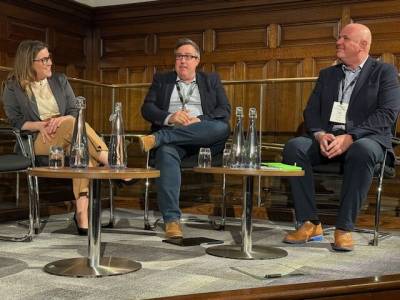
The insights came from a discussion on digital skills and capability at the recent Think Digital Government event.
Richard Kelly, digital capability programme lead at the Government Digital Service – DSIT highlighted the critical challenge of scaling digital talent, noting the prime minister’s bold target of making one in ten civil servants digital professionals.
“We need to bring in potentially an extra 20,000 people within the next five years to deliver on that promise,” said Kelly.
The panel emphasised that digital skills are no longer confined to specialised roles but are now essential across all professional domains. “Digital skills run through everything, just like financial literacy,” said Kelly, drawing a parallel to how technological competence has become as fundamental as basic financial understanding.
Citizens Advice’s Artificial Intelligence programme lead, Siobhan Durkin provided insights into a more nuanced approach to AI integration, focusing on responsible implementation rather than wholesale technological replacement.
Citizens Advice is taking a measured approach, developing AI strategies that prioritise ethical considerations and human expertise. “We’re not just hiring a large influx of AI people,” said Durkin. “Instead, we’re looking at how we can embed AI capabilities while ensuring robust safeguarding and vulnerability checks.”
Her team is collaborating with domain experts to create frameworks that ensure AI outputs meet stringent quality and ethical standards.
If you liked this content…
 Leadership skills for digital practitioners
 Cognizant joins UK government’s TechFirst programme to boost tech talent pipeline
 What’s Next for Digital Government?
 On Building Digital Capability, Leaders Call for Culture Shift, Not Just Recruitment
 ‘Digital Where Possible, Human Where It Matters’ – Leaders Set Out AI Priorities for Public Services
Elsewhere, Findlay Young, chief digital & delivery officer at Peregrine, introduced another perspective on skills development, advocating for a “pyramid” approach to professional capabilities.
“Rather than building narrow, vertical skill sets, we should develop complementary skills that enable better collaboration,” he said.
The discussion highlighted several key strategies for digital transformation:
- Apprenticeship and Training Programmes
GDS is launching a large-scale apprenticeship program aimed at bringing 2,000 new digital professionals into the civil service. These programs aren’t just about technical skills but also incorporate leadership and soft skills development.
- Cross-Disciplinary Team Building
The panellists stressed the importance of multi-disciplinary teams. The team is the unit of delivery, they said, advocating for approaches that blend technical expertise with domain-specific knowledge.
- Continuous Learning and Adaptation
All speakers underscored the need for continuous upskilling. Kelly noted that GDS’ digital capability framework is regularly updated to reflect emerging technological trends and skill requirements.
The panellists advocated for strategic integration, continuous learning, and maintaining a human-centric approach. Young’s pyramid metaphor captured the spirit of the conversation: building comprehensive, adaptable skill sets that enable professionals to collaborate across disciplines and technological boundaries.